BASELINE
Cross-Device Health Intelligence System
WHY BASELINE?
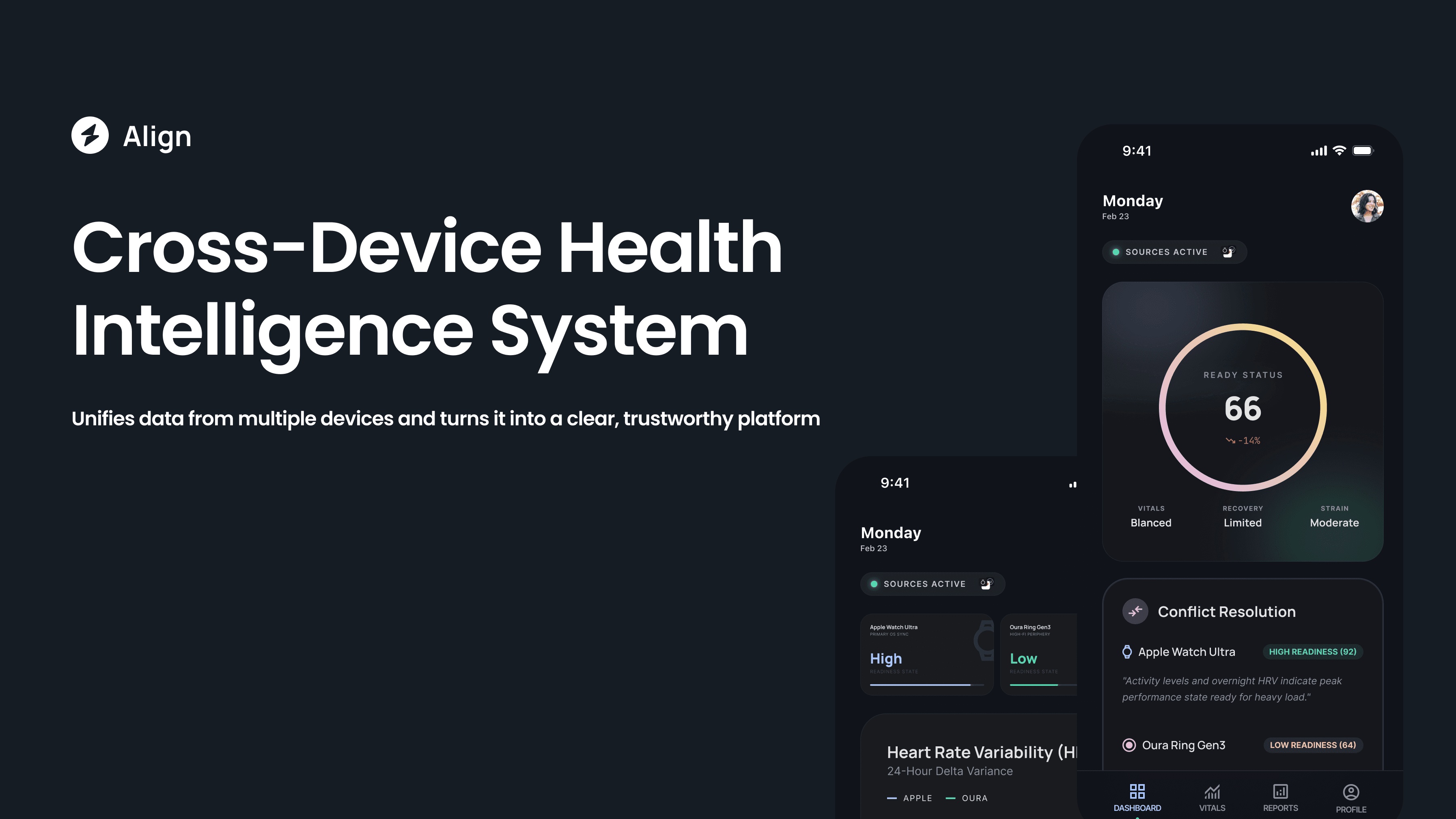
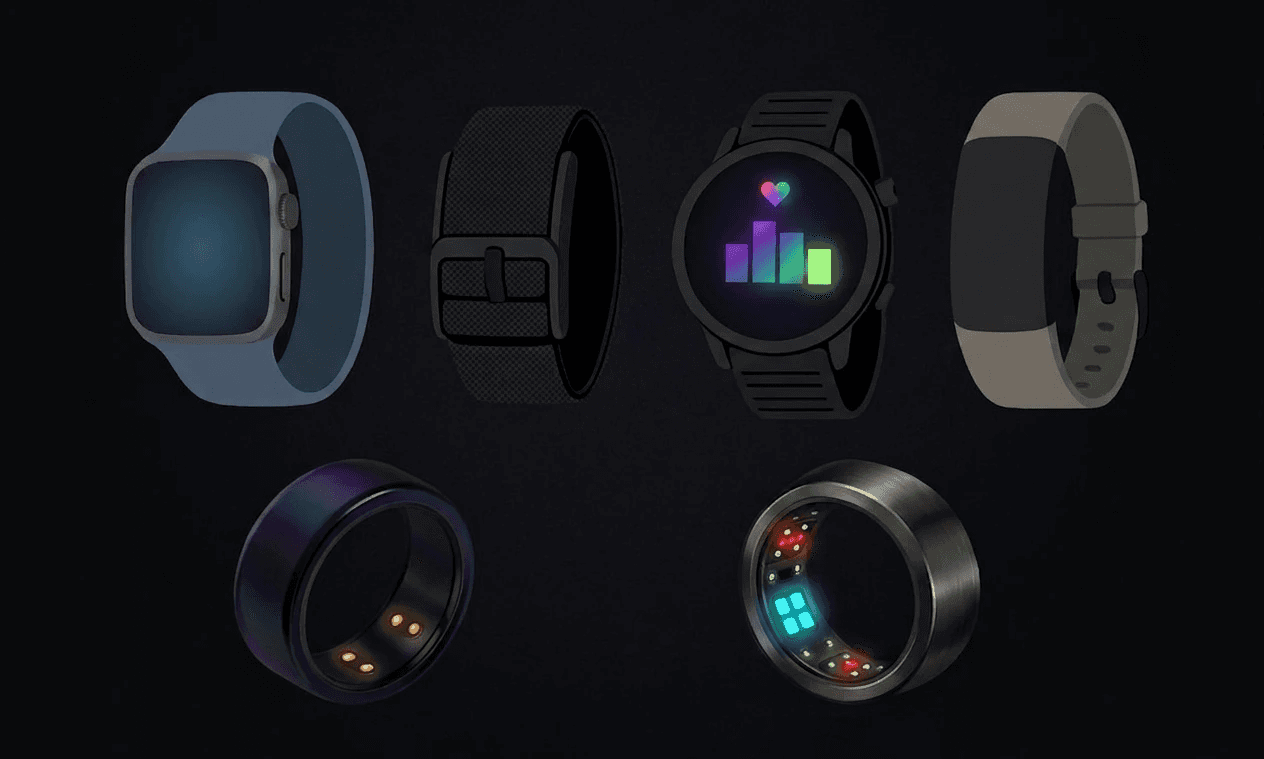
Many people use multiple wearable devices every day and are constantly receiving health data from different sources. In the middle of a busy day, this information quickly becomes overwhelm, especially when the data doesn’t agree, making it hard to know what to trust or what to do.
Align brings everything together and turns it into one clear decision, helping people move from uncertainty to confident action.
GET TO KNOW OUR TARGET USER
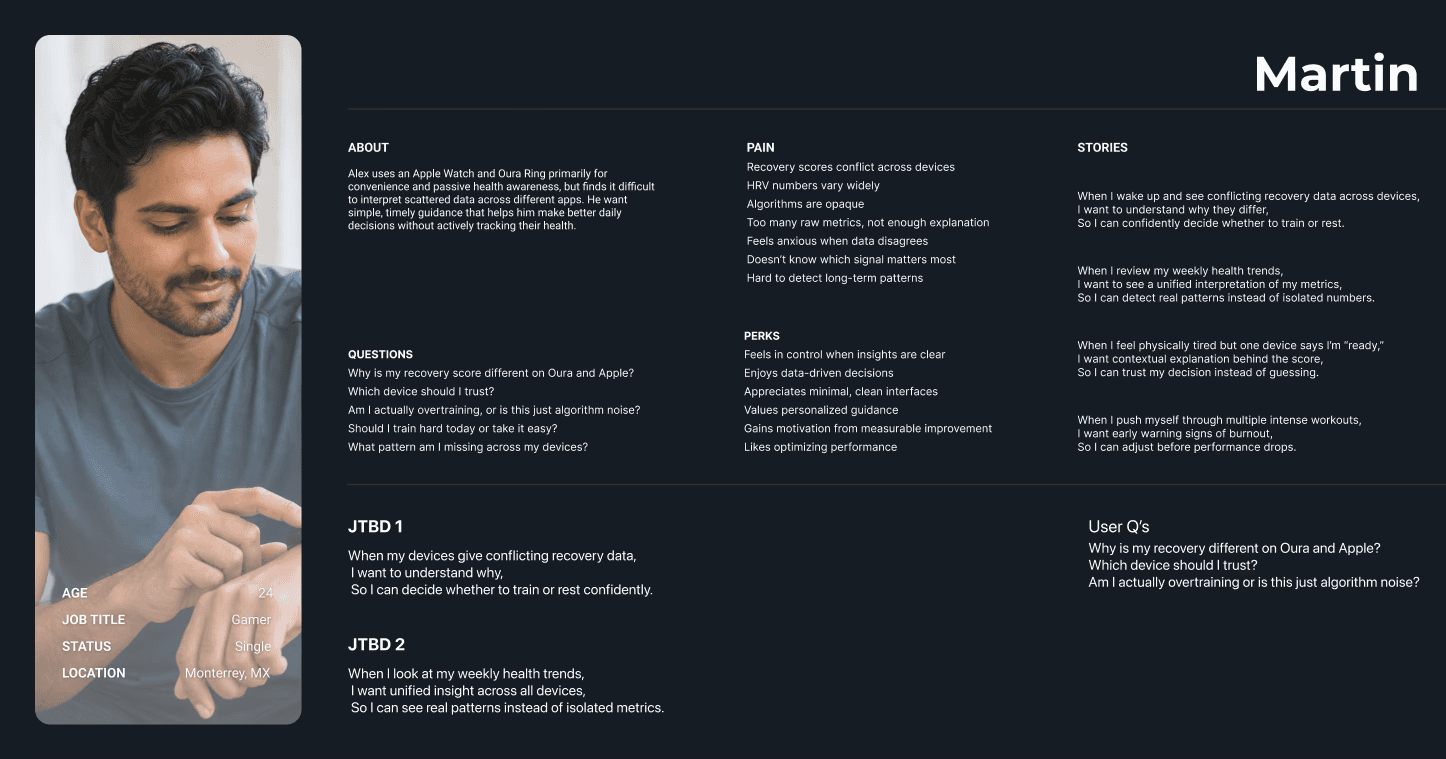
What is Martin looking for?
“Should I train today or take it easy?”
“What pattern am I missing across my devices this week?”
“Why is my recovery different on Oura and Apple right now?”
DESIGN RATIONAL
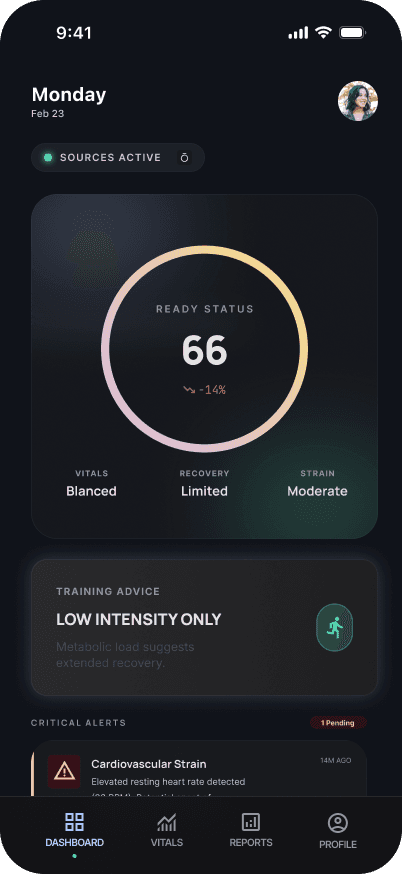
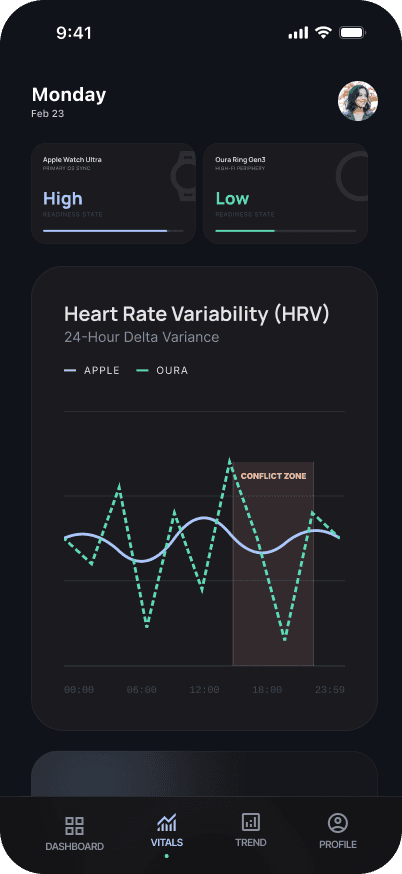
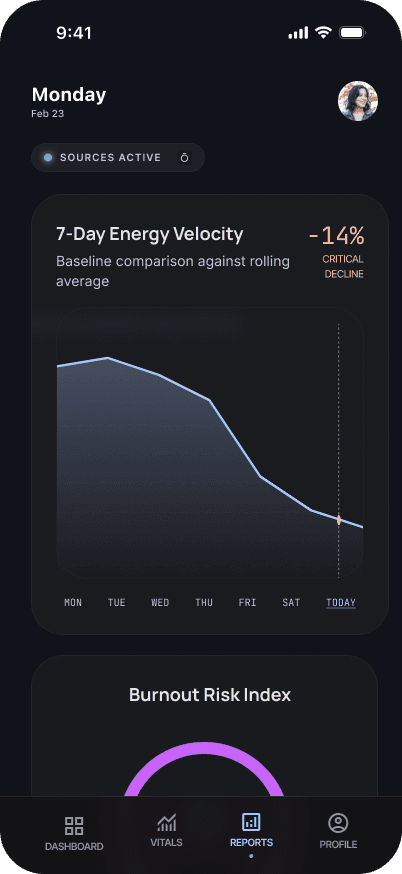
ORIGINAL
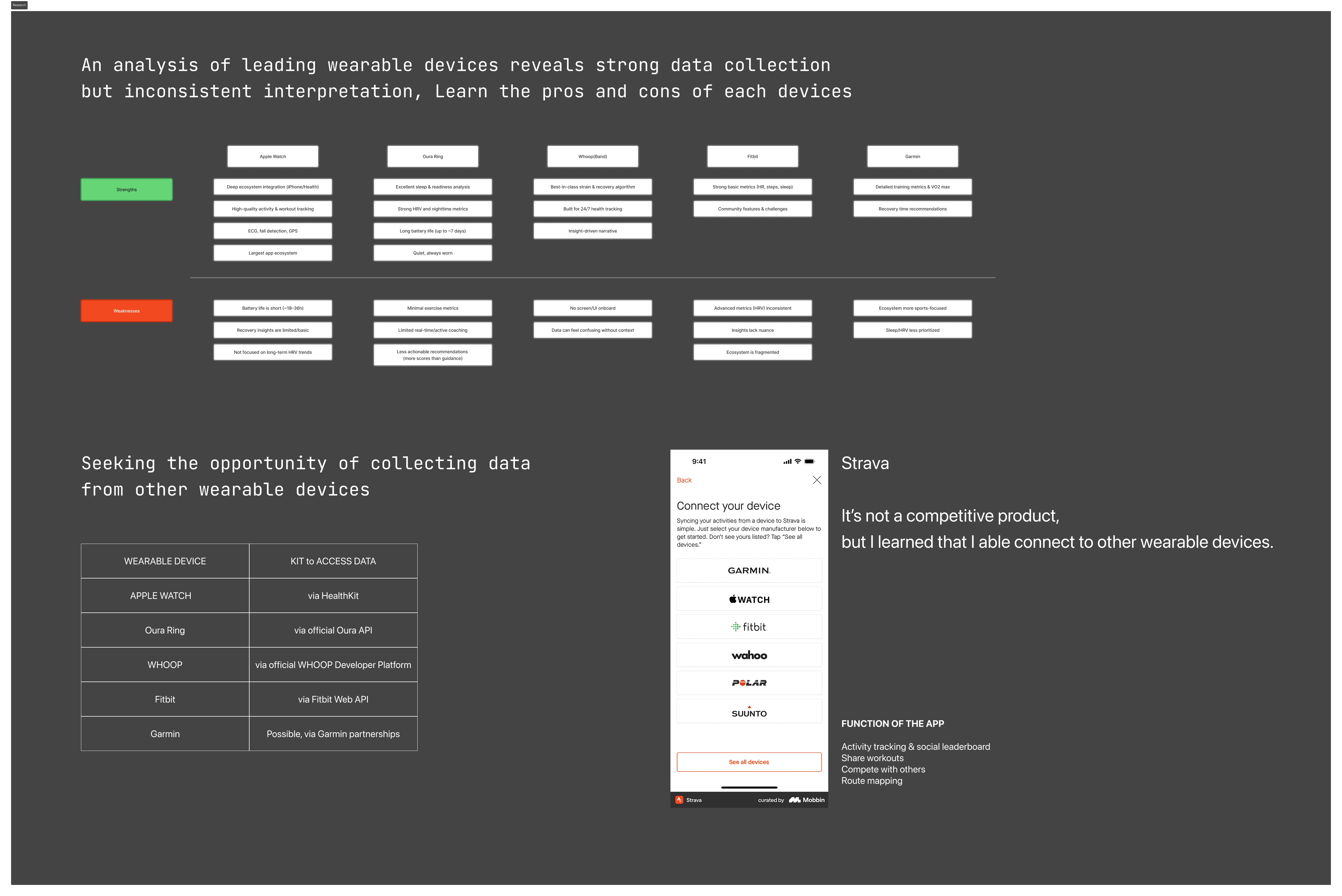
Information is scattered across too many places, and users can already access similar data from other apps. The real value of this app is to cut through that noise and provide clear, precise guidance so users can instantly understand their body and know what to do.
AFTER
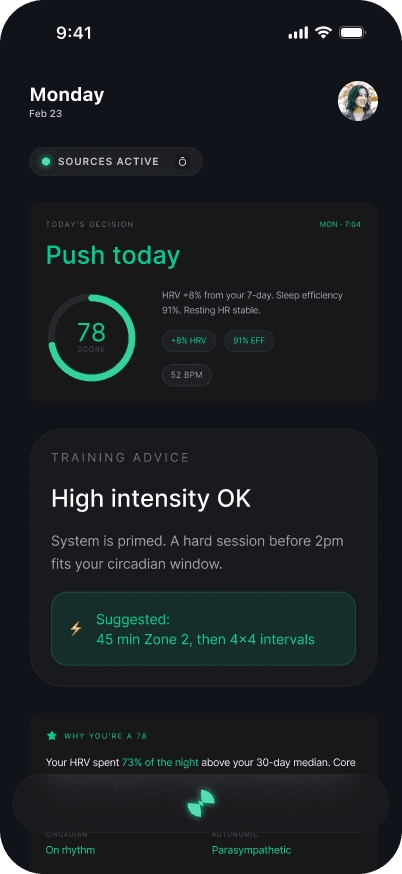
DASHBOARD
Remove nav bar
Keep all the decision making in a single page, adding an AI bot for further information needed
AI EMBEDED
AI was introduced as an intelligence layer to provide further information if needed
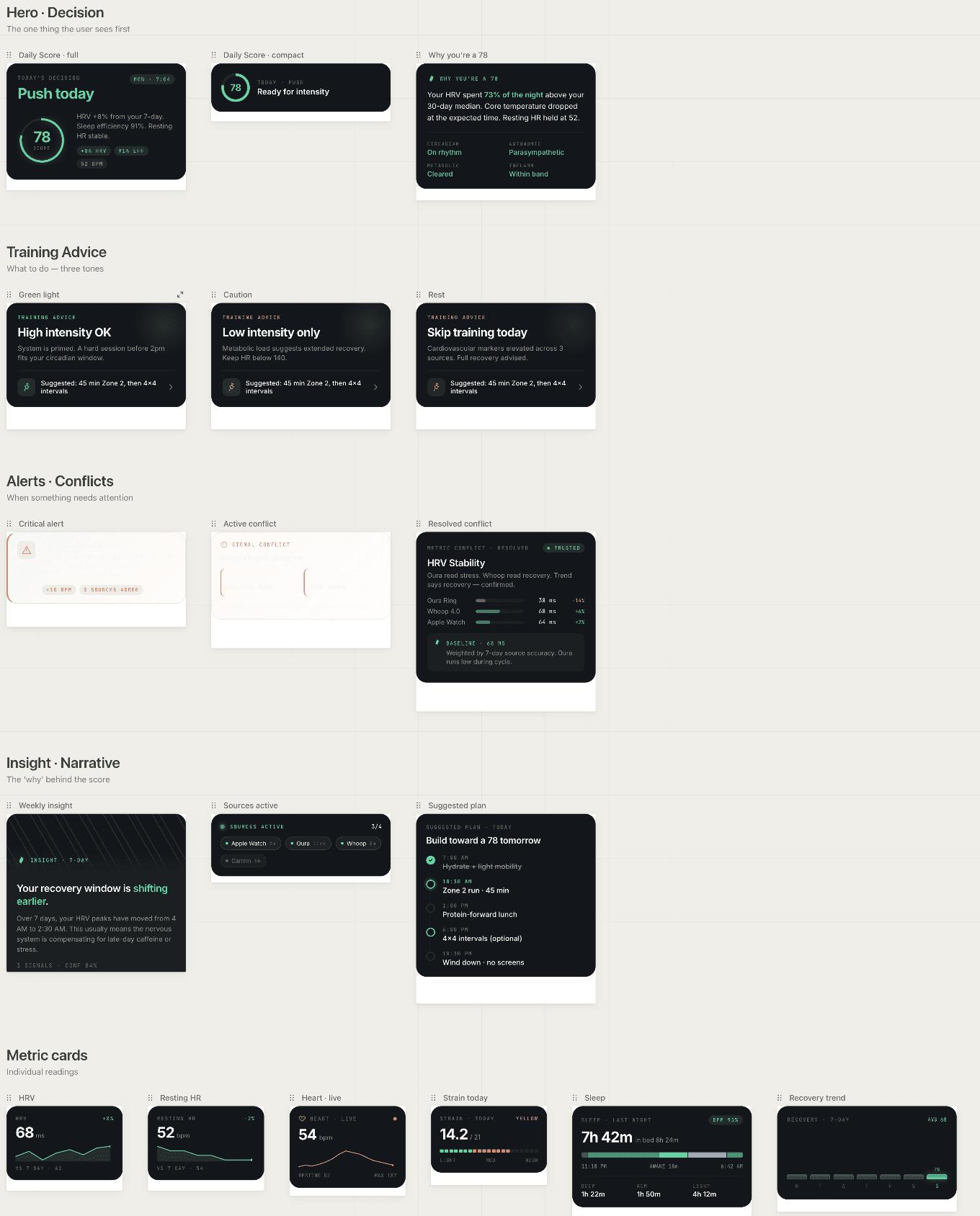
CARD COMPONENT
Different card component provide to review in the dashboard and set answer showing in the AI chat
EARLY STAGE
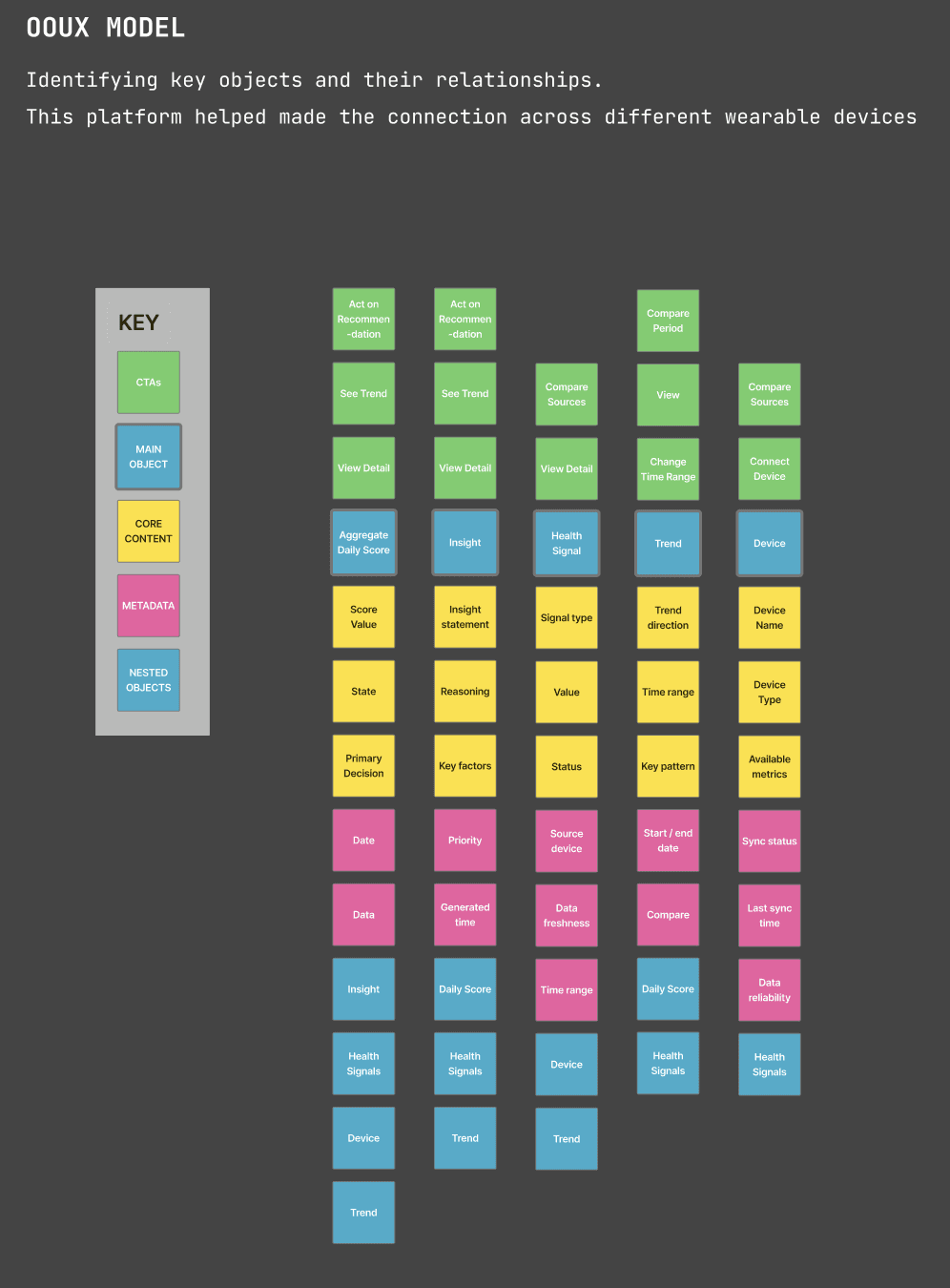
EXPLORE WITH OOUX MODEL
OOUX is valuable in early exploration because it shifts the focus from interface design to system definition. By identifying core objects and how they relate, it ensures that the product is built around meaningful information and user understanding rather than isolated screens. This makes it easier to design flexible, scalable experiences and explore multiple interaction patterns before committing to a final flow.
Research
TAKE AWAY
OOUX MODEL
Working with OOUX helped me think in terms of systems rather than pages, allowing me to define how wearable data becomes meaningful insight and action. This made it easier to design for clarity, especially in a space where users are overwhelmed by information.
Clarity Over Data
I also learned that more data does not create more value. Reducing cognitive load and delivering a single, clear decision proved to be more impactful than exposing detailed metrics.
REFLECTION
If I continued this project, I would focus on testing how users trust the unified score, especially when their devices give conflicting results. Building confidence in the system is critical for users to rely on it in real decisions.